
Dividend tax guide
Dividend Tax Calculator: Work Out Your Dividend Tax for 2026 to 2027
How your dividend tax is worked out
- Add your incomeSalary, savings, then dividends
- Take off allowances£12,570 personal, £500 dividend
- Find the bandBasic, higher or additional
- Apply the rate10.75%, 35.75% or 39.35%
- Pay HMRCBy 31 January 2028
You have taken money out of your company as dividends, or you are about to, and the real question is how much HMRC will want next January. The answer is never one flat rate. It depends on your other income, on which band each pound of dividend lands in, and on two rates that went up on 6 April 2026.
This page shows your tax band by band, then explains the 2026 to 2027 rates, the £500 allowance, the £100,000 taper and the split most directors use. Enter your figures in the dividend tax calculator below and the working appears straight away.
Dividend tax calculator for 2026 to 2027
Enter your other taxable income, your dividends for the tax year and any savings interest. It works for anyone with dividends from their own company or from shares held outside an ISA.
Dividend tax calculator 2026 to 2027
Your dividend tax band by band, after salary, savings and allowances
| Band | Dividends | Rate | Tax |
|---|---|---|---|
| Personal allowance | £0.00 | 0% | £0.00 |
| Dividend allowance | £500.00 | 0% | £0.00 |
| Basic rate | £37,200.00 | 10.75% | £3,999.00 |
| Higher rate | £0.00 | 35.75% | £0.00 |
| Additional rate | £0.00 | 39.35% | £0.00 |
| Total | £37,700.00 | 10.61% | £3,999.00 |
The working
Total income is £50,270.00, so your personal allowance is £12,570.00. Your personal allowance covers your other income, so your taxable dividends of £37,700.00 start at the bottom of the basic rate band. The first £500.00 is taxed at 0% under the dividend allowance but still uses band space. Then £37,200.00 at 10.75% is £3,999.00.
Knock on tax on your other income
Uses 2026 to 2027 rates and sets your allowances in the way that gives the lowest total bill, as the law requires. Figures are rounded to the nearest penny.
How to use the calculator
The calculator covers the tax year from 6 April 2026 to 5 April 2027. Follow these steps.
- Add up salary, pension, rental and self employed profit, before tax.
- Enter all dividends received in the tax year.
- Put bank interest in the savings box.
- Choose Scotland if you are a Scottish taxpayer, so the dividend tax calculator taxes your other income correctly.
What the result shows and leaves out
The table splits your dividends across the allowances and rate bands, and the effective rate is the tax divided by your dividends. A second box appears if dividends also raise the tax on your other income. Pension contributions, Gift Aid and the marriage allowance are not included.
Key facts
- Basic rate
- 10.75% up to £50,270 of total income
- Higher rate
- 35.75% up to £125,140
- Additional rate
- 39.35% above £125,140
- Dividend allowance
- £500 at 0%, using band space
- Over £10,000
- Self Assessment return needed
- Payment due
- 31 January 2028
Dividend tax rates for 2026 to 2027
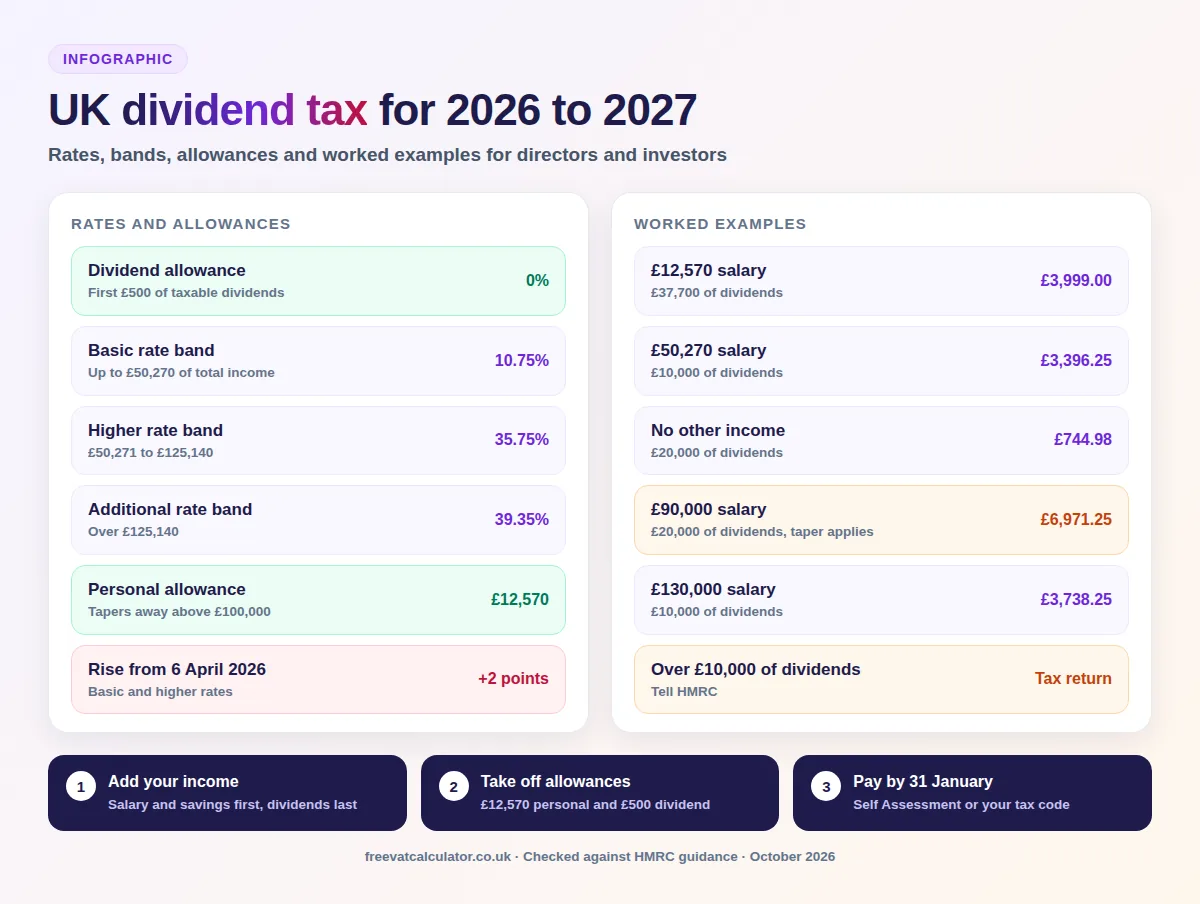
For the tax year from 6 April 2026, the current dividend tax rate is 10.75% in the basic rate band, 35.75% in the higher rate band and 39.35% in the additional rate band. Which rate applies depends on your total income, because dividends are added on top of everything else.
- 10.75%Basic rate
- 35.75%Higher rate
- 39.35%Additional rate
| Band | Total income with a full personal allowance | Rate on dividends | Rate on salary |
|---|---|---|---|
| Personal allowance | Up to £12,570 | 0% | 0% |
| Dividend allowance | First £500 of taxable dividends | 0% | None |
| Basic rate | £12,571 to £50,270 | 10.75% | 20% |
| Higher rate | £50,271 to £125,140 | 35.75% | 40% |
| Additional rate | Over £125,140 | 39.35% | 45% |
Section 8 of the Income Tax Act 2007 sets these rates, as amended by Finance Act 2026. The dividend income tax rate is the same in England, Wales, Scotland and Northern Ireland.
Dividend tax bands and thresholds
The dividend tax bands are the income tax bands. HMRC adds dividends to your other income to find the tax bracket for each pound, so one dividend can be taxed at two rates. The £12,570 allowance and £37,700 basic rate band are frozen until April 2031.
Higher rate dividend tax
Higher rate dividend tax at 35.75% starts once taxable income passes £37,700, which is £50,270 of total income with a full allowance. On a £50,270 salary, £10,000 of dividends costs £3,396.25.
Dividend tax rates by year
Check the year when you look at an old return or an outdated calculator. The table shows the allowance and rates for recent years.
| Tax year | Allowance | Basic rate | Higher rate | Additional rate |
|---|---|---|---|---|
| 2022 to 2023 | £2,000 | 8.75% | 33.75% | 39.35% |
| 2023 to 2024 | £1,000 | 8.75% | 33.75% | 39.35% |
| 2024 to 2025 | £500 | 8.75% | 33.75% | 39.35% |
| 2025 to 2026 | £500 | 8.75% | 33.75% | 39.35% |
| 2026 to 2027 | £500 | 10.75% | 35.75% | 39.35% |
| 2027 to 2028 | £500 | 10.75% | 35.75% | 39.35% |
The April 2026 dividend tax increase
Budget 2025 raised the ordinary rate from 8.75% to 10.75% and the upper rate from 33.75% to 35.75%, leaving the additional rate at 39.35%. The government’s policy paper expects 3.9 million people to pay more by 2029 to 2030, and the Budget of 28 October 2026 raised the savings rates due from 6 April 2027 to 24%, 44% and 49%.
The Autumn Budget on 28 October 2026 left dividend tax unchanged, so 2027 to 2028 keeps rates of 10.75%, 35.75% and 39.35% and the £500 allowance. It also set property income rates of 24%, 44% and 49% from 6 April 2027 in England, Wales and Northern Ireland, and confirmed new rules on company distributions from April 2028. Our guide to VAT in the Autumn Budget covers it.
The tax free dividend allowance
Everyone gets a tax free dividend allowance of £500 for 2026 to 2027, on top of the personal allowance. It belongs to each shareholder, so a couple who both hold shares get £500 each, and any unused part is lost on 5 April.
How the dividend tax allowance has fallen
HMRC’s November 2022 policy paper set out the cut from £2,000 to £1,000 from April 2023, then to £500 from April 2024. It expected the change to affect about 4.4 million people by 2024 to 2025.
Why allowance dividends still use up your bands
The allowance is really a 0% rate, the dividend nil rate in section 13A of the Income Tax Act 2007, so the first £500 still takes up band space. That is why a £12,570 salary leaves room for £37,700 of dividends at the basic rate, not £38,200. Some calculators treat the allowance as an extra slice and understate the tax by up to £125.
How dividend tax is worked out
Section 16 of the Income Tax Act 2007 treats dividends as the top slice of your income. HMRC taxes income in this order.
- Other income: salary, pension, rental and self employed profit.
- Savings interest, with the starting rate for savings and personal savings allowance.
- Dividends, with the first £500 at 0% and the rest at the dividend rates.
In HMRC’s own example, wages of £29,570 and dividends of £3,000 leave £17,000 of wages taxed at 20%. The first £500 of dividends is tax free and £2,500 is taxed at 10.75%, which is £268.75.
The personal allowance taper above £100,000
Above £100,000 of adjusted net income, your personal allowance falls by £1 for every £2 over, reaching zero at £125,140. Dividends count, so a large dividend can cost you allowance as well as tax, and section 35 rounds the reduced allowance up to a whole pound.
A £90,000 salary with £20,000 of dividends cuts the allowance to £7,570. The dividends cost £6,971.25 and the lost allowance adds £2,000 to the tax on salary, although a pension contribution can win it back.
Dividends above £125,140
Above £125,140 of taxable income, dividends are taxed at 39.35% with no personal allowance. On a £130,000 salary, £10,000 of dividends costs £3,738.25, and the personal savings allowance is lost too.
When the law sets your allowance against dividends
For 2026 to 2027, section 25 of the Income Tax Act 2007 says allowances go wherever they cut your tax most. With little other income and some savings, that is often against dividends, because the starting rate for savings already covers up to £5,000 of interest.
It also matters just below the higher rate threshold. On a £50,000 salary with £10,000 of dividends, setting £270 of allowance against dividends moves the whole £500 dividend allowance into the higher band and cuts the total bill by £42.52. Our calculator tests every allocation, but from April 2027 allowances must be set against salary, pension and self employed profit before any property, savings or dividend income.
Worked dividend tax examples for 2026 to 2027
These examples use 2026 to 2027 rates with no pension contributions or reliefs. The effective rate is the dividend tax as a share of the dividends.
| Other income | Dividends | How they are taxed | Dividend tax | Effective rate |
|---|---|---|---|---|
| £12,570 salary | £37,700 | £500 at 0%, £37,200 at 10.75% | £3,999.00 | 10.61% |
| £50,270 salary | £10,000 | £500 at 0%, £9,500 at 35.75% | £3,396.25 | 33.96% |
| None | £20,000 | £12,570 personal allowance, £500 at 0%, £6,930 at 10.75% | £744.98 | 3.72% |
| £5,000 salary | £45,000 | £7,570 personal allowance, £500 at 0%, £36,930 at 10.75% | £3,969.98 | 8.82% |
| £90,000 salary | £20,000 | £500 at 0%, £19,500 at 35.75% | £6,971.25 | 34.86% |
| £130,000 salary | £10,000 | £500 at 0%, £9,500 at 39.35% | £3,738.25 | 37.38% |
Tax on directors’ dividends
Most owner managed companies pay directors a small salary and the rest as dividends. Dividends come from profit after corporation tax, so compare the company and the director together, and see our guide to sole trader vs limited company if you have not incorporated yet.
Salary versus dividends for directors
Salary costs employer National Insurance but saves corporation tax. Dividends carry no National Insurance but come from taxed profit.
| Point | Salary | Dividends |
|---|---|---|
| Corporation tax relief | Yes | No |
| Employee National Insurance | 8% from £12,570 to £50,270, then 2% | None |
| Employer National Insurance | 15% above £5,000 | None |
| Income tax rates | 20%, 40%, 45% | 10.75%, 35.75%, 39.35% |
| How tax is paid | PAYE each month | Self Assessment or tax code |
| State Pension | Counts from £6,708 a year | Does not count |
The usual salary and dividend split for 2026 to 2027
A sole director usually takes a £12,570 salary, free of income tax and employee National Insurance. The company pays £1,135.50 of employer National Insurance, as a company whose sole director is its only paid employee cannot claim the Employment Allowance. Then £37,700 of dividends costs £3,999.
A £5,000 salary avoids employer National Insurance but usually leaves less, because salary is deductible for corporation tax. Run through as a dividend and salary calculator, £50,000 of profit at 19% leaves the director about £463 better off with the £12,570 salary.
| Item | £12,570 salary | £5,000 salary |
|---|---|---|
| Employer National Insurance | £1,135.50 | £0.00 |
| Corporation tax at 19% | £6,895.96 | £8,550.00 |
| Dividends paid | £29,398.54 | £36,450.00 |
| Dividend tax | £3,106.59 | £3,050.85 |
| Director keeps | £38,861.95 | £38,399.15 |
Corporation tax comes before any dividend
Companies pay corporation tax at 19% on profits up to £50,000 and 25% above £250,000, with marginal relief between. Our corporation tax calculator works out the company side, and the table ignores the £500 allowance.
| Dividend band | At 19% | At 25% |
|---|---|---|
| Basic rate | 27.71% | 33.06% |
| Higher rate | 47.96% | 51.81% |
| Additional rate | 50.87% | 54.51% |
How to pay a dividend properly
A dividend needs enough profit and a paper trail. GOV.UK sets out these steps.
- check dividends do not exceed profits from this and earlier years
- hold a directors’ meeting and minute it, even as sole director
- write a voucher with the date, company, shareholder and amount
- give each shareholder a copy and keep one on file
Overdrawn director’s loans
A director’s loan still unpaid nine months after the company’s year end triggers a section 455 charge, which the company can reclaim once the loan is repaid. The rate follows the dividend upper rate for the tax year the loan was made, so it is 35.75% on loans made from 6 April 2026 and 33.75% on earlier ones.
When to tell HMRC and how to pay dividend tax
Dividends are paid with no tax taken off, so you must tell HMRC once they exceed your allowances. The method depends on the amount and whether you already file a return.
| Your dividends | What to do | Deadline |
|---|---|---|
| Within your allowances | Nothing, unless you already send a tax return, which must include all your dividends | 31 January 2028 if you send a return |
| Up to £10,000, no tax return | Ask HMRC to change your tax code, or call the helpline | After 5 April and before 5 October 2027 |
| Up to £10,000, already file a return | Include them on the return | 31 January 2028 |
| Over £10,000 | Register for Self Assessment | Register by 5 October 2027, pay by 31 January 2028 |
Paying dividend tax through your tax code
If HMRC collects the tax through your tax code, it comes off your salary or pension monthly, with no lump sum in January. Our guide to contacting HMRC lists the helpline numbers.
Self Assessment deadlines and payments on account
Paper returns for 2026 to 2027 are due by 31 October 2027, and online returns and payment by 31 January 2028. A late return costs £100 and late payment interest is 7.75%, while Making Tax Digital for Income Tax may apply to self employed or property income.
If your bill is £1,000 or more and 80% or less was collected at source, HMRC also wants payments on account on 31 January and 31 July. Each is half of the previous bill, so a first year can mean paying 150% of it in one January.
Dividend tax for Scottish taxpayers
Scottish taxpayers pay Scottish rates on salary but UK rates and bands on dividends, under section 13 of the Income Tax Act 2007. Their salary still uses up the UK bands first.
A Scot earning £45,000 pays 42% on salary above £43,662, yet the next £5,270 of dividends stays in the UK basic rate band. Choose Scotland in the calculator for the salary side.
How to pay less dividend tax
There is no special relief for dividends, but a few legal steps help. These work for most shareholders.
- hold shares in a stocks and shares ISA, up to £20,000 a year
- invest through a pension, where investment income is free of income tax
- time dividends either side of 5 April to use two allowances
- keep adjusted net income under £100,000 with pension contributions
- consider shares for a lower earning spouse, after taking advice
Other rules that affect dividend income
National Insurance on dividends
Dividends are not earnings, so nobody pays National Insurance on them. It is charged on employment pay and self employed profits, not on investment income.
Foreign and reinvested dividends
Overseas dividends are taxed like UK ones and share the £500 allowance, with Foreign Tax Credit Relief for tax taken abroad. Dividends reinvested through a plan are still taxable in the year they are paid.
Dividends and Child Benefit
Adjusted net income includes dividends, so they count for the High Income Child Benefit Charge. It takes back 1% of Child Benefit for every £200 over £60,000, so all of it goes at £80,000.
Dividends compared with capital gains tax
Gains on selling shares fall under capital gains tax instead, with a £3,000 exempt amount and rates of 18% and 24%. Business Asset Disposal Relief charges 18% on qualifying gains from 6 April 2026, up to a £1 million lifetime limit, which the Budget of 28 October 2026 cuts to £500,000 for disposals from 6 April 2027.
Running a limited company?
Work out the tax on your company profit first with our corporation tax calculator, then plan your dividends here.
Dividend tax calculator FAQs
These are the questions directors and investors ask most about tax on dividends. The sections above give more detail.
How much can I take in dividends tax free?
With no other income, £13,070 for 2026 to 2027: £12,570 in the personal allowance and £500 in the dividend allowance. If a salary already uses the personal allowance, only £500 is tax free.
Do I need to tell HMRC about dividends within my allowance?
Not if you do not send a tax return, because you only need to act when some of your dividends are taxable. If you already send a Self Assessment return, you must include all your dividends on it, even those covered by your allowances.
Can I carry forward an unused dividend allowance?
No. Each tax year stands alone, and the allowance cannot pass to a spouse.
Is a dividend tax calculator accurate for Scottish taxpayers?
Yes for the dividend tax, because dividends use UK rates everywhere. Choose Scotland so any knock on tax on salary uses Scottish rates.
You now have the 2026 to 2027 rates, the £500 allowance, the order HMRC taxes your income in and a dividend tax calculator that shows your bill band by band. Everything you need to plan your next dividend and set aside the right amount for HMRC is above.
Sources: HMRC, tax on dividends; HMRC, Income Tax rates and allowances; HMRC policy paper, dividend tax rates from April 2026; Income Tax Act 2007; HMRC, rates and thresholds for employers 2026 to 2027; HMRC, payments on account. This page is general information, not tax advice.